
Anal Fistula: Complete Overview & Treatment in Nepal
- 5 min read
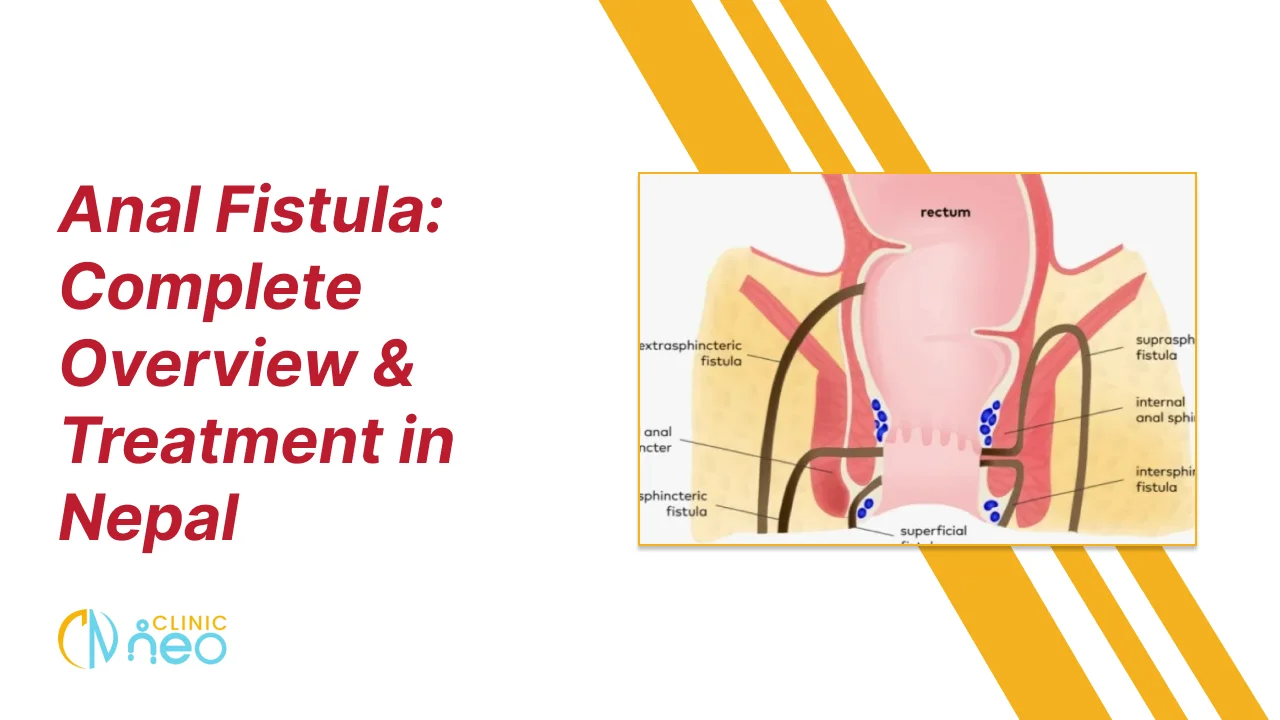
Are you suffering from painful sensations or continuous discharge in your anal region? If sitting down or passing stool is becoming difficult for you, you could be having an anal fistula (फिस्टुला). Many people in Nepal are often unaware of the condition, and most often confuse it with piles or fissures.
Delay in treatment of fistula may result in infection, and the symptoms may keep on coming back. Fortunately, there are ways to treat the condition effectively, with even laser treatment being considered for certain cases.
In this guide, we provide a complete overview of anal fistula in Nepal, covering its causes, symptoms, types, diagnosis, treatment options, and treatment costs.
What is an Anal Fistula
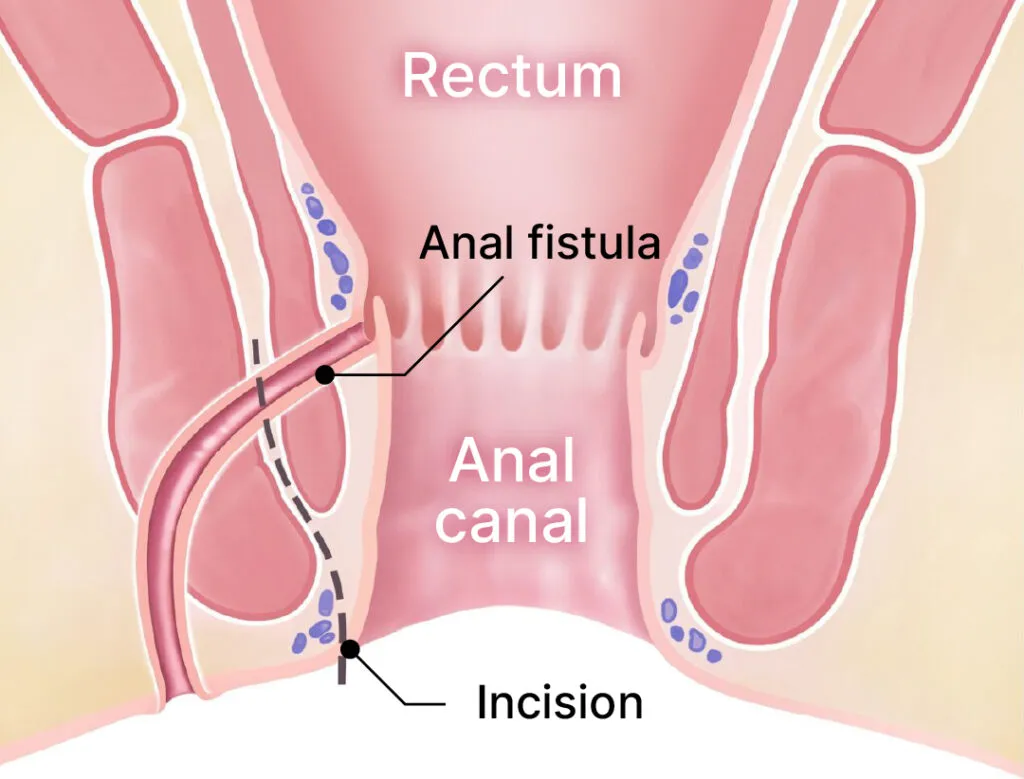
An anal fistula (फिस्टुला) is an abnormal tunnel that develops between the inside of the anal canal and the skin around the anus. It usually forms after an infection or abscess near the anus creates a pathway to the skin.
The tunnel may have an internal opening inside the anal canal and an external opening on the skin near the anus. Depending on its location and how deeply it passes through the surrounding muscles, an anal fistula can vary in complexity.
Causes of Anal Fistula
There are several reasons why an anal fistula may form, but they generally develop as a result of an infection in the anal area. These include:
- Anal Abscess: The most common cause for the development of an anal fistula is a recurrent or chronic untreated abscess in the anal area. If an abscess bursts but the infected tunnel remains intact, it can develop into a fistula.
- Blockage in anal glands: Infections are caused by blockage of the small glands in the anal canal which result in an abscess, which may eventually lead to fistula.
- Inflammatory bowel disease (IBD): IBDs such as Crohn’s disease can cause inflammation in the bowel, thereby increasing the chances of developing an anal fistula.
- Surgery or injuries in the anal area: Surgery or injury in the anal region can sometimes lead to the development of an anal fistula.
- Tuberculosis and other infections: Certain infections can affect the tissues around the anus and may lead to fistula formation.
Types of Anal Fistula
Anal fistulas are classified based on how the fistula tract passes through or around the anal sphincter muscles. The main types include:
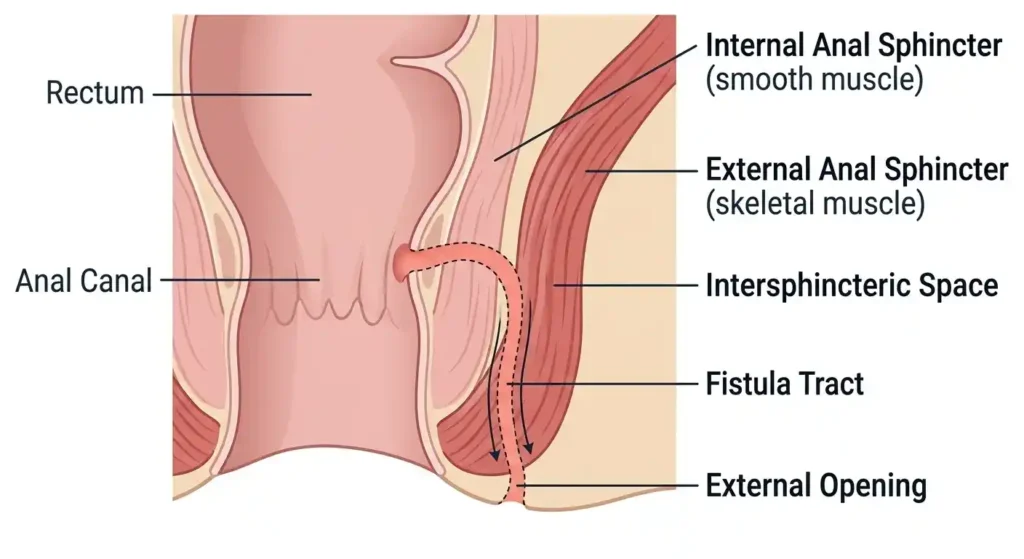
1. Intersphincteric Fistula / इन्टरस्फिङ्क्टेरिक फिस्टुला
An intersphincteric fistula passes through the space between the internal and external anal sphincter muscles. It is generally considered one of the simpler types of anal fistula.
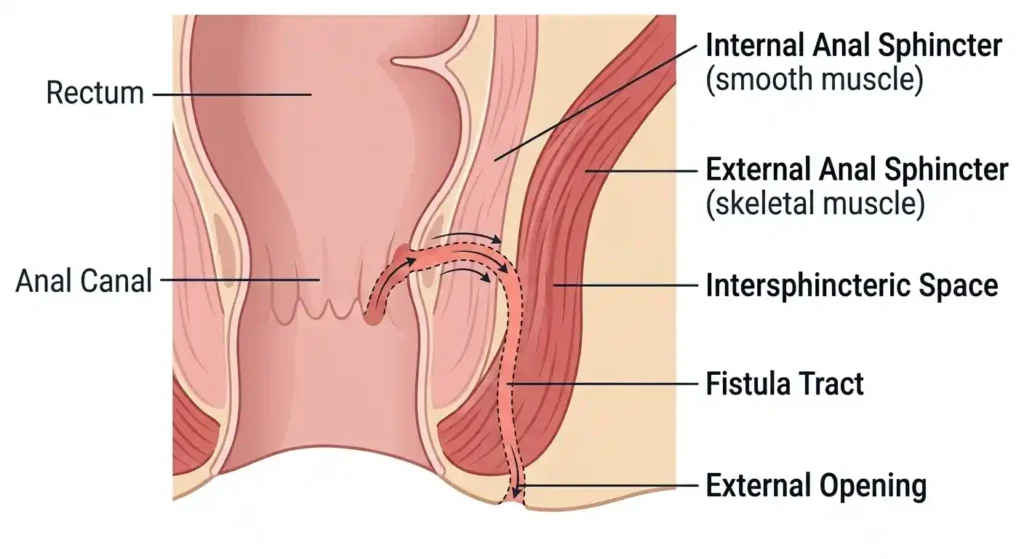
2. Transsphincteric Fistula / ट्रान्सस्फिङ्क्टेरिक फिस्टुला
A transsphincteric fistula passes through both the internal and external anal sphincter muscles before reaching the skin around the anus. Its treatment requires careful consideration of the sphincter muscles.
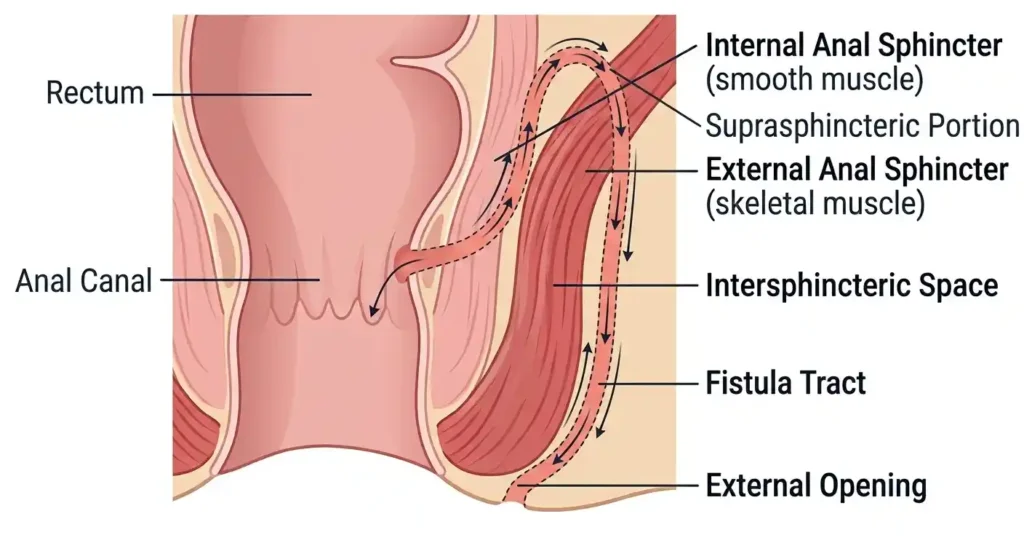
3. Suprasphincteric Fistula / सुप्रास्फिङ्क्टेरिक फिस्टुला
A suprasphincteric fistula passes above the external anal sphincter before curving downward and opening near the anus. It involves more of the surrounding tissue than an intersphincteric fistula.
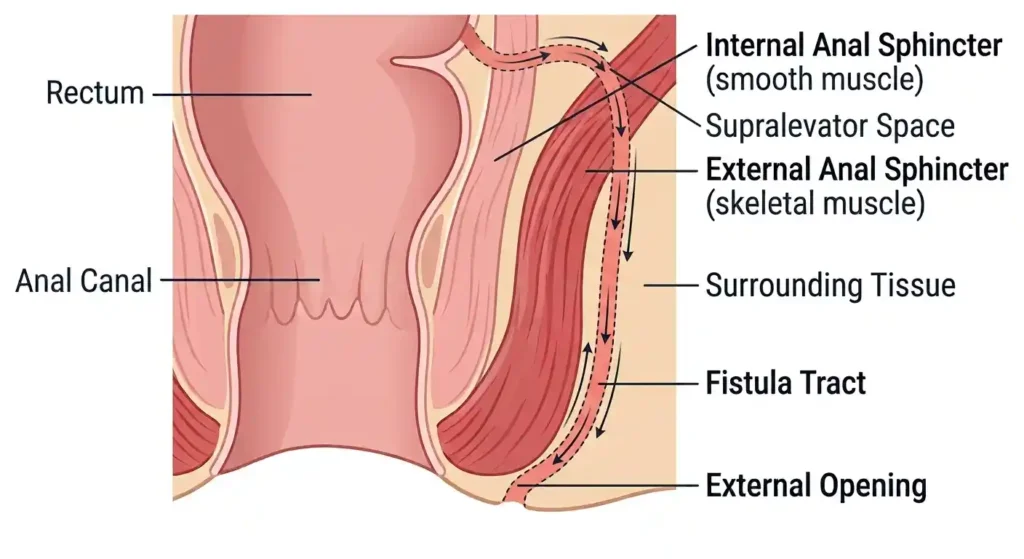
4. Extrasphincteric Fistula / एक्स्ट्रास्फिङ्क्टेरिक फिस्टुला
An extrasphincteric fistula passes outside the anal sphincter muscles and connects the rectum to the skin around the anus. It is less common and may be associated with conditions other than a typical anal gland infection.
Common Symptoms of Fistula
The symptoms of an anal fistula depend on the specific location and the nature of the tract. The most common symptoms of fistula include:
- Pain around the anus: A pain that is either constant or throbbing and which increases when sitting or passing stools.
- Swelling or a lump: An inflamed lump may form at the anus due to inflammation or an infection.
- Persistent discharge: Pus or any other fluid may continuously leak from an opening near the anus with a foul smell.
- Skin irritation: Constant discharge from the anus may cause itching, reddening, and irritation of the skin.
- Repeated abscess formation: There will be the formation of painful lump that keeps swelling and draining until the fistula is treated.
- Fever: Fever may also occur in the presence of an active infection or an abscess.
- Visible opening near the anus: A hole may be seen at the site where the fistula tract opens.
Note: Some symptoms of anal fistula such as pain, swelling, discharge, and irritation of the skin at the anus area can also be related to other anorectal conditions including piles and anal fissures. A proper medical examination is important to identify the underlying cause and confirm the diagnosis.
How is an Anal Fistula Diagnosed
A doctor diagnoses an anal fistula by checking the location of the fistula opening and the path of the tract using physical examinations and imaging. A proctology consultation may be recommended for a detailed evaluation of anal and rectal conditions. Examination involves:
- Physical examination: The doctor examines the area around the anus for signs of swelling, pain, pus, or holes in the skin.
- Digital rectal examination: In this method, a gloved finger is inserted into the anal canal to check for any abnormalities.
- Proctoscopy: An instrument may be used to view inside the anus canal and detect the internal opening of the fistula.
- Other imaging tests: MRI or other imaging tests may be performed to check the path of the tract for complex or recurring cases of a fistula.
- Further tests: If another health problem like inflammatory bowel disease is believed to cause the fistula, more tests will be recommended.
Treatment Options for Fistula in Nepal
The treatment of an anal fistula in Nepal depends on its position, severity, and involvement of the anal sphincters muscle. Some popular treatment options for anal fistula are:
1. Fistulotomy
Fistulotomy is one of the common surgical procedures for treating an anal fistula. In this process, the fistula tract is opened throughout its length and allowed to heal itself. This treatment method is opted if the fistula does not involve any substantial part of the anal sphincters muscles.
2. Seton Placement
In seton placement, a thin surgical thread is passed through the fistula tract. This procedure drains the infection and keeps the fistula tract open. Seton placement is performed when a fistula tract involves a considerable portion of the anal sphincters muscles.
3. Sphincter-Sparing Procedures
The sphincter-sparing procedures are applied to treat the anal fistula while preserving the anal sphincter muscles and lowering the chances of interfering with the function of bowel control. This may be useful in the cases where complex fistulas are present that pass through a significant portion of the sphincter muscles.
Some common ones include:
- LIFT (Ligation of Intersphincteric Fistula Tract): The fistula is located in the intersphincteric space and carefully closed off. Thus, the infection pathway is stopped without damaging the anal sphincter muscles.
- Advancement flap: Healthy tissues from nearby are moved to cover the internal opening of the fistula tract which is cleaned or treated. Thus, the infection source is closed down which supports the healing process.
4. Laser Treatment
Laser treatment is a minimally invasive option for treating suitable anal fistulas in Nepal. It uses controlled laser energy to treat the fistula tract while aiming to preserve the surrounding anal sphincter muscles.
The major advantages of lasers include:
- Preservation of the sphincter muscles: The operation entails minimal injury to the anal sphincter muscles, which helps to preserve the normal bowel movements.
- Minimal pain and bleeding: In laser treatment of the fistula, there is minimal injury to tissues that lead to less pain and bleeding.
- Fast recovery: The procedure being minimally invasive means that the patient will take less time before they resume their normal activities.
- Minimal scarring: Due to the tiny access point for the fiber laser, the tissue injury and the scarring is minimized as compared to more extensive surgery.
- Appropriate for certain fistulas: Laser treatment may be considered for different types of fistulas depending on their location, complexity, and relationship with the sphincter muscles.
How to Prevent Fistula
Not all anal fistulas can be prevented, but reducing the risk of infections and treating anal conditions early can help lower the chances of developing one.
- Treat anal abscesses early: Seek medical care for a painful lump, swelling, or pus around the anus, as an untreated abscess can develop into a fistula.
- Prevent constipation: Eat enough fiber, drink plenty of water, and stay physically active to maintain regular and easier bowel movements. Following simple home remedies for constipation can also help maintain healthy bowel habits.
- Maintain good anal hygiene: Keep the area around the anus clean and dry, especially after bowel movements.
- Do not ignore persistent symptoms: Ongoing pain, swelling, or discharge around the anus should be evaluated by a doctor.
- Manage underlying conditions: If you have conditions such as inflammatory bowel disease, follow your doctor’s treatment plan to help reduce the risk of complications.
When Should You See a Doctor for Fistula
You should see a doctor if you have persistent or recurring symptoms around the anus, especially if they interfere with your daily activities.
- Persistent pain or swelling: Pain, tenderness, or a lump around the anus that does not improve should be medically evaluated.
- Continuous or recurring discharge: Pus, blood, or foul-smelling discharge from an opening near the anus may indicate a fistula.
- Recurring abscesses: If a painful swelling repeatedly develops and drains, consult a doctor to check for an underlying fistula.
- Fever or worsening symptoms: Fever, chills, increasing pain, or swelling may indicate an active infection that requires prompt medical attention.
- Symptoms that do not improve: If symptoms continue despite home care or previous treatment, a specialist evaluation may be necessary.
If symptoms persist or recur, an evaluation by our doctors at Clinic Neo can help determine the underlying cause and provide appropriate treatment.
Cost of Fistula Treatment in Nepal
The cost of fistula treatment in Nepal can vary depending on the type and complexity of the fistula, the treatment method, and the facilities required. At Clinic Neo, we aim to keep advanced fistula treatment reasonably priced and accessible to all patients.
Fistula surgery at Clinic Neo typically costs between NPR 40,000 and NPR 60,000, although the final cost may vary depending on the individual case and treatment required. We provide cost-effective treatment while maintaining appropriate standards of care.
Why Choose Clinic Neo for Anal Fistula Treatment
At Clinic Neo, we provide comprehensive diagnosis and personalized treatment for anal fistula using evidence-based medical care and advanced treatment options. Our focus is on relieving symptoms, promoting healing, and offering safe, and cost-effective treatment tailored to each patient’s condition.
Our doctors specialize in proctology and gastroenterology, providing advanced treatment for piles, anal fissures, anal fistulas, and other digestive conditions. With experienced specialists and modern technology, we are committed to delivering effective, and patient-centered care.
Frequently Asked Questions (FAQs)
What is the main cause of anal fistula?
The most common cause of an anal fistula is an anal abscess. When an infected abscess does not heal properly or continues to recur, an abnormal tunnel can form between the anal canal and the skin.
Can an anal fistula heal on its own?
An anal fistula usually does not heal completely on its own. Although an abscess may drain and symptoms may temporarily improve, the fistula tract can remain and cause recurring pain, swelling, or discharge. Medical evaluation is generally needed to determine the appropriate treatment.
Is anal fistula serious?
An anal fistula can become a persistent problem if left untreated. It may cause recurring infections, abscesses, pain, and discharge. Some complex fistulas can also involve the anal sphincter muscles, making proper diagnosis and treatment important.
Is surgery necessary for an anal fistula?
In most cases, definitive treatment requires a procedure or surgery because the fistula tract generally does not close on its own. The appropriate treatment depends on the fistula’s location, complexity, and involvement of the anal sphincter muscles.
What is the best treatment for anal fistula?
There is no single treatment that is best for every anal fistula. Fistulotomy, seton placement, sphincter-sparing procedures, and laser treatment may be considered depending on the type and complexity of the fistula. A specialist should evaluate the fistula before deciding on the most suitable treatment.
READY TO TAKE THE NEXT STEP?
We're Here to Help
You Feel Better.
Whether you have a question, need more information, or are ready to book your consultation – our team is just a call or message away.
Working Hours
Sunday - Friday (3:00 PM - 7:00 PM)
Saturday (8:00 AM - 11:00 AM)
Call Us
9805678379, 01-5907370
Email Us
clinicneonepal@gmail.com
Visit Us
Lokanthali, Bhaktapur, Nepal
Our Recent Blogs

5 min read
Proctologist vs Gastroenterologist in Nepal: Which Specialist Should You See?
When you have persistent digestive problems like Anal pain, rectal bleeding, or constant stomach ache, it can leave you unsure which doctor to call. In Nepal, this confusion is common
5 min read
Constipation Treatment in Nepal: Causes, Symptoms, Diagnosis and Treatment Options
Constipation can make everyday life uncomfortable, from feeling heavy and bloated to spending too much time in the bathroom. It can affect people of all ages and may be linked
5 min read
Anal Fistula: Complete Overview & Treatment in Nepal
Are you suffering from painful sensations or continuous discharge in your anal region? If sitting down or passing stool is becoming difficult for you, you could be having an anal
5 min read
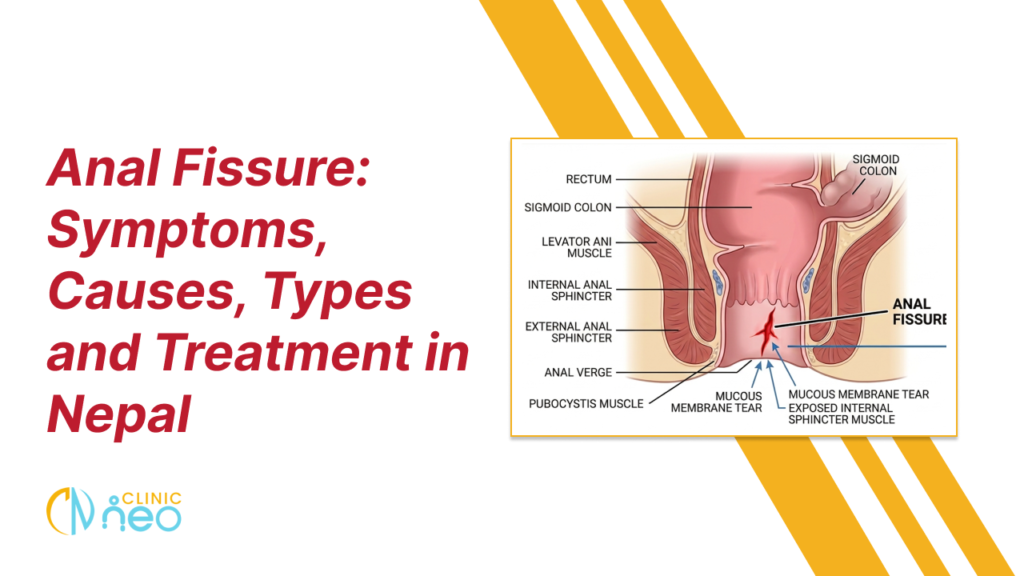
Anal Fissure: Symptoms, Causes, Types and Treatment in Nepal
Experiencing sharp pain during bowel movements or noticing blood after passing stool can be worrying. These symptoms are often ignored or mistaken for piles (hemorrhoids), causing many people to delay
5 min read
Common Myths About Piles: What Doctors Really Say
5 min read