
Anal Fissure: Symptoms, Causes, Types and Treatment in Nepal
- 5 min read
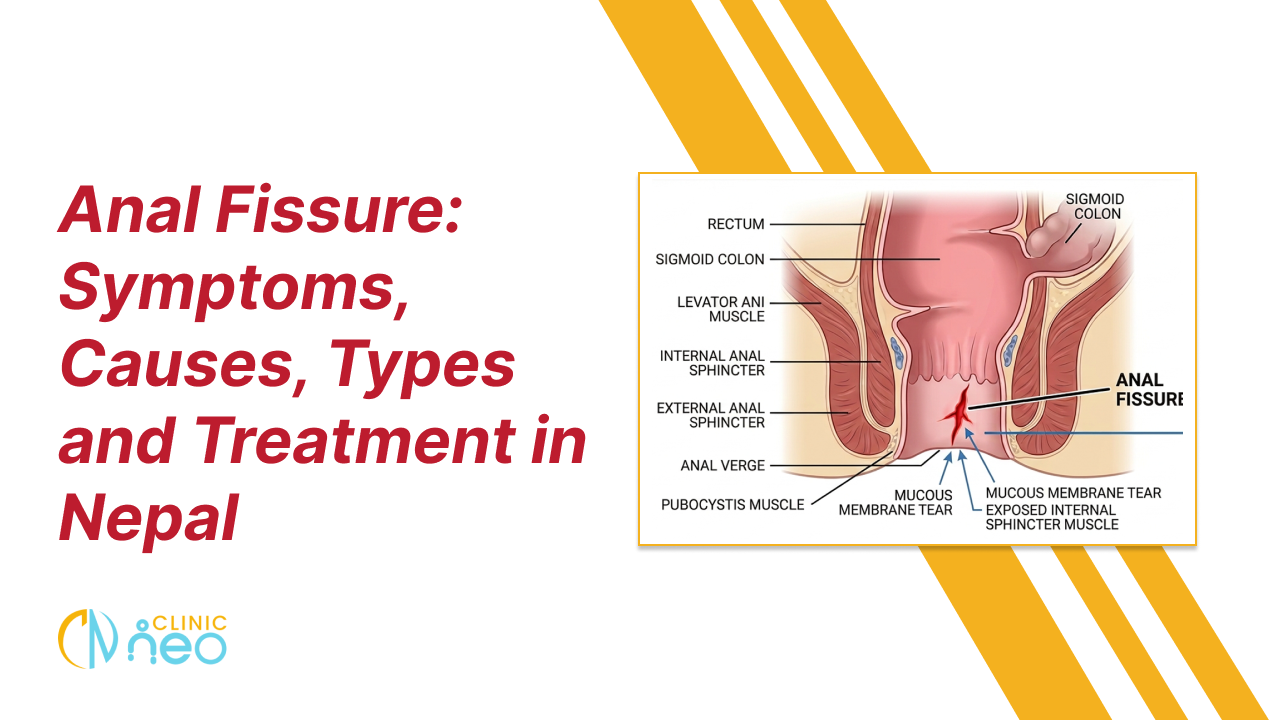
Experiencing sharp pain during bowel movements or noticing blood after passing stool can be worrying. These symptoms are often ignored or mistaken for piles (hemorrhoids), causing many people to delay seeking medical attention.
Early diagnosis and timely treatment can help relieve pain, promote healing, and prevent the condition from becoming more severe. Understanding the symptoms, causes, and available treatment options is the first step toward effective recovery.
In this guide, we’ll cover everything you need to know about anal fissure, including its symptoms, causes, types, diagnosis, treatment options, and prevention, along with the best treatment services available in Nepal.
What is Anal Fissure ?
An anal fissure is a tear or crack in the lining of the anal canal which is the opening from which the stools exit the body. It is a common anorectal condition which can affect anyone at any age and is typically caused due to a anal canal injury. Anal Fissure can be either acute or chronic depending on how long it takes to heal when it develops.

Common Symptoms of Anal Fissure
The symptoms of anal fissure vary according to the severity of the tear. Some may experience mild pain, while others may have severe pain during or after bowel movements.
Some of the common symptoms of anal fissure are:
- Pain during bowel movement
- Rectal bleeding
- Feeling of burning
- Itching at the anal area
- Tear in the skin close to the anal opening
- Skin tag (sentinel pile)
- Spasm of muscles in the anal area
Note: The symptoms of anal fissure are sometimes similar to those caused by other anorectal conditions like piles (hemorrhoids) and anal fistula. A proper medical examination is important for an accurate diagnosis.
Causes of Anal Fissure
An anal fissure occurs due to tearing of the tissues in the anus. It is mostly associated with pressure and irritation of the anal canal during bowel movements; however, there are various reasons for someone to develop an anal fissure, including:
- Chronic constipation
- Passing hard stools
- Frequent Diarrhea
- Childbirth
- Straining during bowel movement
- Inflammatory bowel disease (IBD)
- Trauma to the anal canal
Types of Anal Fissure: Acute VS Chronic
Anal fissures are generally classified into two types based on how long they last and how well they heal: acute anal fissures and chronic anal fissures.
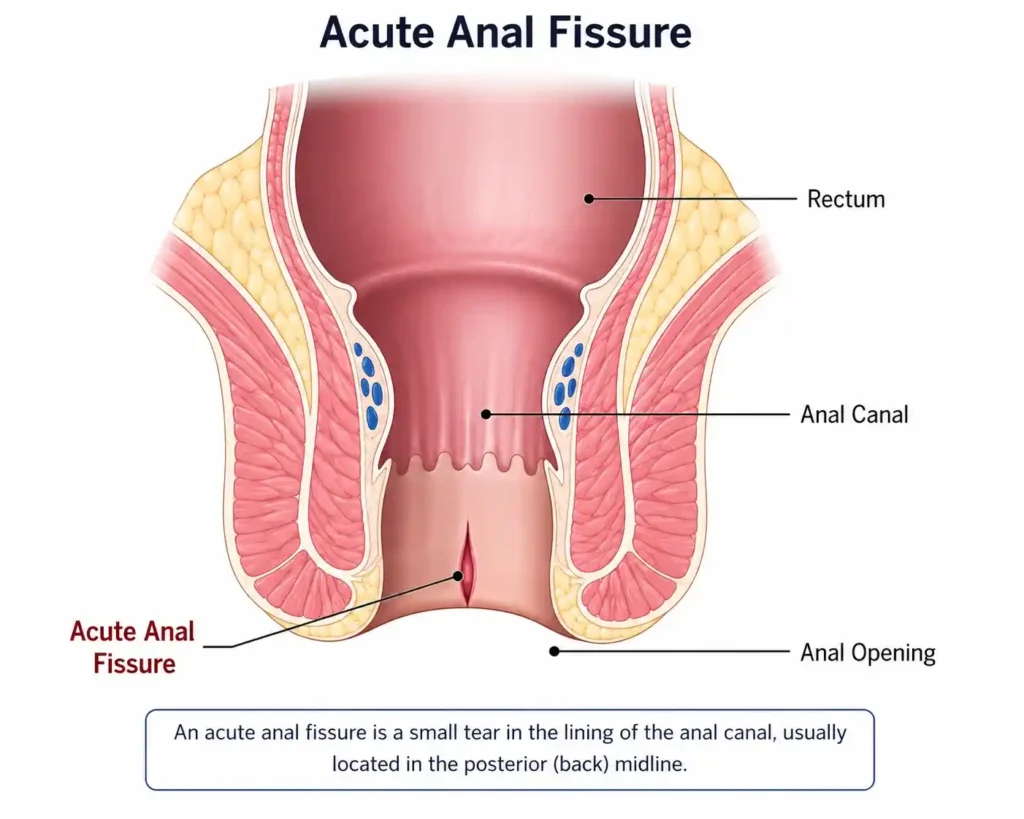
1. Acute Anal Fissure
An acute anal fissure is a recent tear in the anal canal that usually lasts for less than six weeks. It often heals with conservative treatment, such as dietary changes, medications, and proper bowel habits.
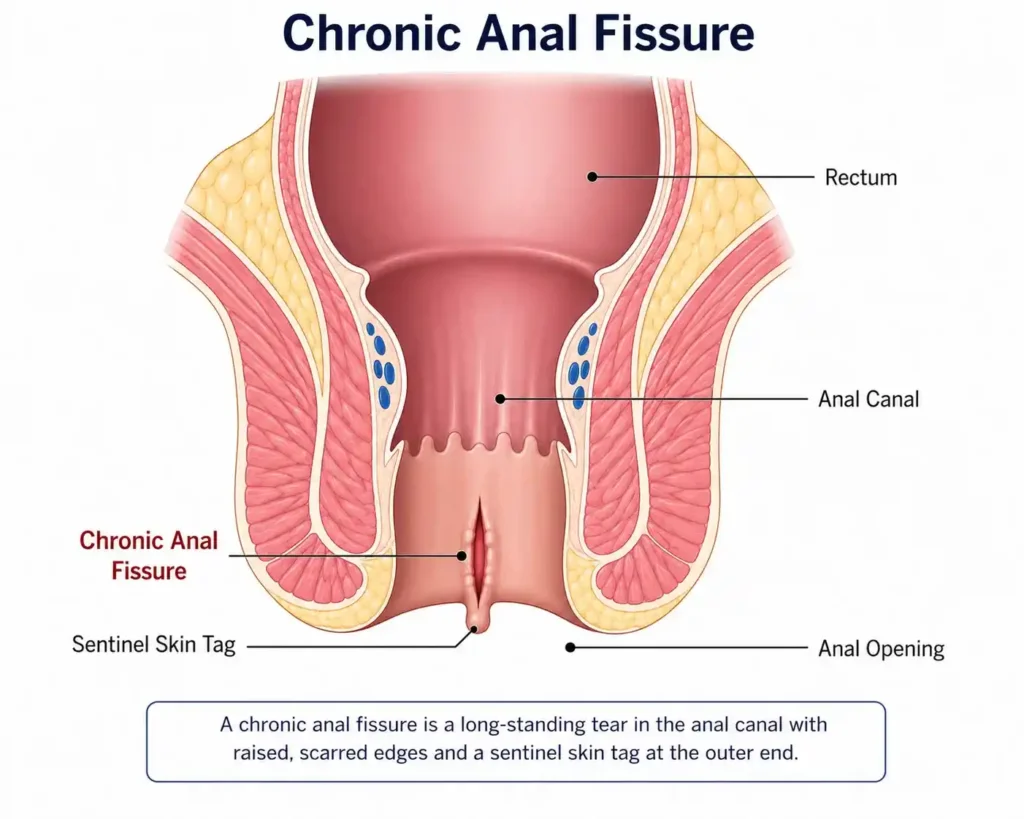
2. Chronic Anal Fissure
A chronic anal fissure is a tear that lasts for more than six weeks or keeps recurring despite the treatment. It is less likely to heal on its own and may require advanced treatment, such as laser treatment for anal fissure or surgery.
How is an Anal Fissure Diagnosed
An anal fissure is usually diagnosed based on your symptoms and a physical examination. Your doctor may recommend the following:
- Review of your medical history and symptoms
- Physical examination of the anal area to look for a visible tear
- Gentle examination of the anal canal, if needed
- Additional tests in some cases to rule out other conditions or identify the underlying cause
Treatment Options for Anal Fissure
The choice of treatment options for an anal fissure depends on the level of severity as well as the duration of the conditions. While acute anal fissure can be treated using conservative treatment options, chronic anal fissures require more advanced treatment methods.
1. Home Care
A number of acute anal fissures are known to be effectively treated with minimal changes in lifestyle that reduce strain on the anal canal and promote healing.
- Consume foods with high fiber to ensure that the stools remain soft.
- Stay hydrated by drinking enough water every day.
- Do not strain yourself during bowel movement.
- Do not delay the urge to pass stools.
- Take warm sitz baths for 10–15 minutes several times a day to relieve pain and relax the anal muscles.
2. Medications
In addition to the above-mentioned home treatments, you may be recommended certain medications that would assist in relieving pain, reducing muscle spasms and help the fissure heal
- Pain-relieving medicines for relief
- Medication that will soften your stools.
- Creams or ointments for relaxing your anus sphincter.
- Medication to deal with the underlying condition.
3. Laser Treatment in Nepal
Laser fissure treatment is considered to be one of the minimally invasive treatment procedures for chronic anal fissure that do not heal with conservative treatment. It offers faster recovery and less discomfort than traditional surgery for suitable patients.
- Minimally invasive procedure.
- Less pain after treatment.
- Minimal bleeding.
- Faster recovery.
- Lower risk of damage to surrounding tissues.
How to Prevent Anal Fissure?
Not all cases of anal fissures can be prevented, but there are certain things that one should do in order to minimize the chances of developing this condition. Here are some simple ways to prevent an anal fissure:
- Eat a high-fiber diet: Eat plenty of fruits, vegetables, whole grains, and legumes to make sure your stools remain soft.
- Drink enough water: Staying well-hydrated helps prevent constipation and reduces the risk of passing hard stools.
- Don’t strain during defecation: Straining is one of the main causes of developing fissure.
- Don’t hold back the urge to defecate: Delaying bowel movement may make the stools hard and more difficult to pass.
- Do physical activities regularly: Regular physical activity promotes healthy digestion and defecation.
- Manage constipation and diarrhea: Treating these conditions on time prevents injury to the anal canal.
When Should You See a Doctor?
While some acute anal fissures may improve with home care, persistent or worsening symptoms should be evaluated by a doctor. Seeking medical attention early can help prevent complications and ensure you receive the right treatment.
You should see a doctor if you:
- Have severe pain during or after bowel movements that do not improve.
- Notice persistent or recurrent rectal bleeding.
- Continue to have symptoms despite home care and medications.
- Experience symptoms for more than six weeks, as this may indicate a chronic anal fissure.
- Develop a lump, discharge, fever, or worsening pain around the anus.
- Frequently experience constipation or hard stools that lead to recurrent fissures.
If you are experiencing these symptoms, consult an experienced fissure doctor in Nepal for a proper diagnosis and treatment plan.
Why Choose Clinic Neo for Anal Fissure Treatment in Nepal?
Choosing the right hospital is very important for effective anal fissure treatment in Nepal. At Clinic Neo, we provide comprehensive diagnosis and personalized treatment for anal fissures using evidence-based medical care and advanced treatment options. Our focus is on relieving symptoms, promoting healing, and offering safe, and cost-effective treatment tailored to each patient’s condition.
Our doctors specialize in proctology and gastroenterology, providing advanced treatment for piles, anal fissures, anal fistulas, and other digestive conditions. With experienced specialists and modern technology, we are committed to delivering effective, and patient-centered care.
Frequently Asked Questions (FAQs)
How do I know if I have piles (hemorrhoids) or an anal fissure?
Piles and Fissure both conditions can cause pain and rectal bleeding, but anal fissure typically causes sharp pain during or after bowel movements, while piles often cause painless bleeding, itching, or a lump around the anus. A medical examination is the best way to determine the exact cause.
What happens if a fissure is left untreated?
If fissure is left untreated, it may develop into a chronic fissure, making it more difficult to heal. Persistent pain, repeated bleeding, and muscle spasms may also occur, requiring advanced treatment.
Does the fissure heal on its own?
Yes, many acute anal fissures heal on their own with proper home care, a high-fiber diet, adequate water intake, and healthy bowel habits. However, chronic fissures usually require medical treatment.
Is surgery necessary for every anal fissure?
No. Most acute anal fissures can be treated with home care and medications. Surgery or laser treatment is generally considered only when conservative treatment does not provide relief or the fissure becomes chronic.
How long does it take for an anal fissure to heal?
Most acute anal fissures heal within 2 to 6 weeks with proper treatment and lifestyle changes. Chronic anal fissures usually take more than 6 weeks to heal and may require additional medical treatment, such as medications or laser treatment.
Can constipation cause an anal fissure?
Yes. Chronic constipation and passing hard stools are among the most common causes of anal fissures. Preventing constipation by eating a high-fiber diet, drinking enough water, and staying active can help reduce the risk.
How much does anal fissure treatment cost in Nepal?
The cost of anal fissure treatment in Nepal depends on the type of treatment required and the severity of the condition. At Clinic Neo, laser treatment for an anal fissure typically costs between NPR 40,000 and NPR 50,000. However, the exact cost may vary depending on the patient’s condition and treatment plan.
READY TO TAKE THE NEXT STEP?
We're Here to Help
You Feel Better.
Whether you have a question, need more information, or are ready to book your consultation – our team is just a call or message away.
Working Hours
Sunday - Friday (3:00 PM - 7:00 PM)
Saturday (8:00 AM - 10:00 PM)
Call Us
9805678379, 01-5907370
Email Us
clinicneonepal@gmail.com
Visit Us
Lokanthali, Bhaktapur, Nepal
Our Recent Blogs
5 min read
Proctologist vs Gastroenterologist in Nepal: Which Specialist Should You See?
When you have persistent digestive problems like Anal pain, rectal bleeding, or constant stomach ache, it can leave you unsure which doctor to call. In Nepal, this confusion is common
5 min read
Constipation Treatment in Nepal: Causes, Symptoms, Diagnosis and Treatment Options
Constipation can make everyday life uncomfortable, from feeling heavy and bloated to spending too much time in the bathroom. It can affect people of all ages and may be linked
5 min read
Anal Fistula: Complete Overview & Treatment in Nepal
Are you suffering from painful sensations or continuous discharge in your anal region? If sitting down or passing stool is becoming difficult for you, you could be having an anal
5 min read
Anal Fissure: Symptoms, Causes, Types and Treatment in Nepal
Experiencing sharp pain during bowel movements or noticing blood after passing stool can be worrying. These symptoms are often ignored or mistaken for piles (hemorrhoids), causing many people to delay
5 min read
Common Myths About Piles: What Doctors Really Say
5 min read