
Piles: Types, Symptoms, Causes and Treatment in Nepal
- 5 min read
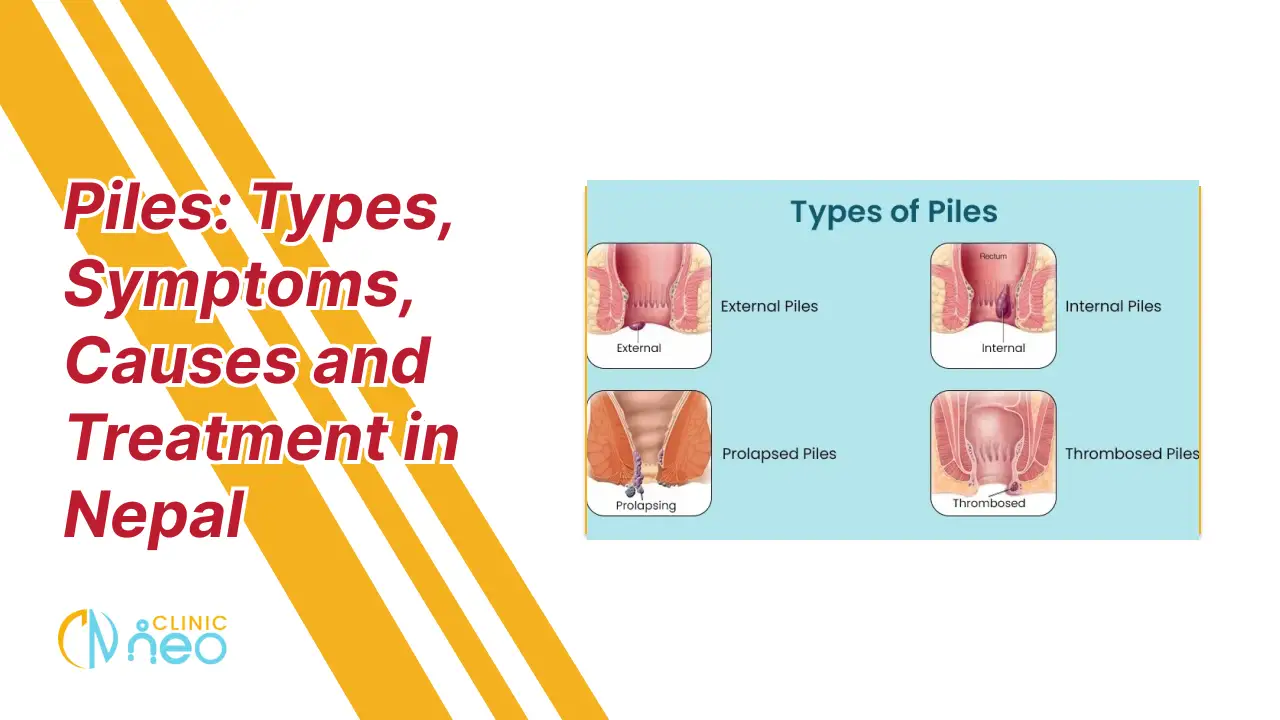
Piles are a common problem that can cause pain, discomfort, and embarrassment. A common health problem that many people in Nepal experience but often ignore. Many patients feel embarrassed to talk about it or do not know where to seek proper piles treatment.
Ignoring piles can lead to severe complications such as blood clots, prolapsed piles, or the need for surgery. Early recognition of piles symptoms and understanding the causes of piles can help prevent complications. With the right treatment, discomfort can be reduced, and recurrence can be prevented
In this blog, we will learn about piles, different types of piles, their symptoms, common causes in Nepal and the most effective piles treatment options available.
What Are Piles (Hemorrhoids)?
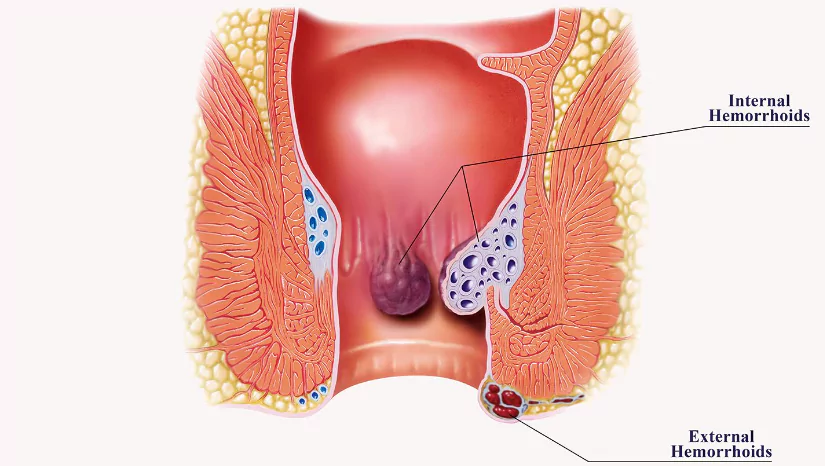
Piles or Hemorrhoids are swollen veins in the anal canal. They occur when blood flow in the veins around the anus increases. This can cause pain, discomfort, and sometimes bleeding. Usually, piles appear because of straining during bowel movements, sitting for long hours, eating low-fiber foods, or lifting heavy objects regularly.
Many people in Nepal have piles but do not know the exact cause or proper treatment procedures to cure this common disease. If ignored, piles can get worse and cause more pain or small lumps near the anal canal.
Types of Piles
Piles can appear in different forms depending on where they develop and how severe they are. The main types are:

Internal Piles
Internal piles form inside the rectum and usually cannot be seen from the outside. They often do not cause pain at first. However, they may lead to bright red bleeding during bowel movements. Many people only notice blood on toilet paper or in the stool.
Internal piles can gradually enlarge and sometimes protrude outside the anal canal. To decide the right treatment, doctors usually classify internal piles into different grades.
Grades of Internal Piles
Internal piles are divided into four grades depending on how much they protrude:
- Grade I: These piles do not prolapse. You may only notice minor bleeding during stool.
- Grade II: Piles prolapse during bowel movement but return on their own.
- Grade III: Piles protrude and need to be pushed back manually.
- Grade IV: Piles remain prolapsed and cannot be pushed inside.
Understanding the grade helps in choosing the right treatments like rubber band ligation, piles laser, or surgery to remove piles.
External Piles
External piles appear under the skin around the anus. They are often painful and can cause discomfort while sitting. Small lumps may form near the anal canal. Sometimes these piles lead to blood clots, which makes them more painful. External hemorrhoids may also cause itching and irritation.
Thrombosed Piles
Thrombosed piles occur when a blood clot forms inside an external hemorrhoid. This can cause sudden, severe pain and swelling around the anus. Thrombosed piles need early treatment to prevent complications.
Doctors may use procedures where infrared light is used to cut the blood supply or a laser for minimally painful removal.
Prolapsed Piles
Prolapsed piles are internal hemorrhoids that have pushed out of the anal canal. They may cause pain, irritation, and bleeding. Some prolapsed piles can become trapped outside the anus and may require professional intervention. Early recognition of symptoms can prevent worsening of the condition and reduce the need for surgery.
Symptoms of Piles
Piles can show different symptoms depending on the type and severity. Knowing the symptoms in an early stage can help in seeking proper treatment and prevent worsening. Common symptoms include:
- Bright red blood on toilet paper or stool
- Small lumps near the anal canal
- Pain or discomfort while sitting
- Itching or irritation
- Feeling of incomplete bowel movement
- Swelling around the anus
Common Causes of Piles
Piles develop when veins in the anal canal are under increased pressure for a long time. This pressure makes the veins swell and sometimes form small lumps. Many people do not realize that certain habits and health issues can trigger piles. Some of the main causes are:
- Chronic constipation or diarrhea
- Straining during bowel movements
- Sitting for long hours
- Obesity or being overweight
- Pregnancy
- Lifting heavy objects regularly
Other factors include aging, which weakens the vein walls. Even lifestyle habits like eating low-fiber foods or not drinking plenty of water can increase the chance of piles.
Common Causes of Piles in Nepal
In Nepal, piles are common because of the local diet and lifestyle patterns. Many people eat low-fiber foods and do not drink enough water. Traditional meals with fewer fruits and vegetables increase constipation. Sitting for long hours in offices or on vehicles is common and increases pressure on the anal canal. Some people lift heavy weights in their daily work, which also triggers piles.
By understanding common causes of piles in Nepal, people can take preventive steps such as eating high fiber foods, drinking enough water, and avoiding habits that increase pressure.
When to Consult a Doctor
Early stage piles can be treated at home but it is crucial to maintain a healthy diet and lifestyle to prevent them from worsening. Many people in Nepal ignore piles because they think they are not serious. However, early consultation can prevent complications and make piles treatment in Nepal more effective. You should consult a doctor for piles treatment if you notice any of the following:
- Bright red bleeding during bowel movements
- Small lumps near the anal canal that are painful or swollen
- Pain or discomfort while sitting that does not improve with home care
- Thrombosed piles or prolapsed piles that are hard to manage at home
- Frequent bleeding or irregular stools
- Constant urge to pass stool or incomplete bowel movements
- Need for professional advice to prevent worsening of internal hemorrhoids or external hemorrhoids
Early consultation also helps identify risk factors and prevent recurrence. Seeking professional help gives patients peace of mind, reduces discomfort, and ensures effective treatment.
Diet and Lifestyle Tips to Prevent Piles
A proper diet and lifestyle can reduce the risk of piles. Making simple changes in diet and lifestyle can improve digestive health and prevent piles as well. Following these tips can lower the risk of hemorrhoids and recurrence after treatment.
- Eat high fiber foods: Include vegetables, fruits, whole grains, and legumes in your daily diet. High fiber softens the stool and reduces straining during bowel movements.
- Drink plenty of water: Staying hydrated helps prevent constipation and improves blood flow in the anal canal.
- Avoid straining: Do not push too hard during bowel movements. Straining increases pressure in the veins and can worsen piles.
- Exercise regularly: Simple activities like walking or light exercise improve blood circulation and prevent swelling in the anal canal.
- Limit lifting heavy objects: Frequent lifting increases pressure in the lower abdomen and triggers piles. Avoid or reduce heavy lifting whenever possible.
- Take breaks from sitting: Long hours of sitting, especially on hard surfaces, can increase pressure in the anal canal. Stand up and stretch regularly.
- Maintain a healthy weight: Excess weight increases strain on the veins in the rectum and anus. A balanced diet and regular activity help maintain a healthy weight.
- Follow a regular toilet routine: Respond to the urge to pass stool promptly. Ignoring it can lead to constipation and increase the risk of piles.
By following these diet and lifestyle tips, people can prevent piles. Early prevention is often more effective than treating severe piles later.
Treatment Options for Piles
Choosing the right piles treatment in Nepal depends on the type, severity, and symptoms of piles. Mild piles may be managed with home remedies and medication. However, more severe cases like prolapsed piles, thrombosed piles, or persistent bleeding may need professional treatment. Knowing the available options helps patients make informed decisions and reduces discomfort.
Traditional Medical Treatment
Traditional medical treatment is the first approach for many patients. Doctors often recommend:
- Topical creams and ointments to reduce pain, swelling, and irritation around the anus
- Oral medicines to strengthen veins and improve blood flow in the anal canal
- Stool softeners to prevent straining during bowel movements
- Rubber band ligation, a minimally invasive procedure where a small band is used to cut the blood supply to the internal hemorrhoids
- Infrared coagulation, where infrared light is used to shrink piles by reducing blood flow
These methods are effective for internal hemorrhoids and some external hemorrhoids. They are generally minimally painful, require less recovery time, and can prevent the need for major surgery if done early.
Piles Laser Treatment in Nepal
Laser treatment is a modern and precise method for managing piles. In this procedure, a laser or infrared light is used to remove or shrink hemorrhoids. Laser treatment is minimally painful and often preferred by patients who want a quick recovery.
At Clinic Neo, patients receive advanced piles laser treatment in Nepal performed by experienced doctors. The procedure is safe, effective, and designed to reduce bleeding, blood clots, and discomfort. Clinic Neo uses modern equipment where infrared light is carefully applied to cut the blood supply to affected veins, ensuring faster healing and a lower risk of infection.
The advantages of piles laser treatment at Clinic Neo include:
- Precise removal of internal hemorrhoids and external hemorrhoids
- Minimal pain during and after the procedure
- Faster recovery with early return to daily activities
- Lower risk of recurrence compared to traditional methods
- Expert guidance on diet, lifestyle, and follow-up care to maintain results
Why choose Clinic Neo for Piles Treatment in Nepal?
Choosing the right hospital is very important for effective piles treatment in Nepal. Clinic Neo is one of the renowned facilities for Piles treatment in Nepal, offering safe, modern, and patient-friendly care for all types of piles. We combine experienced doctors, advanced technology, and a comfortable environment to ensure the best results.
At Clinic Neo, patients receive both traditional medical treatment and laser treatment depending on the type and severity of hemorrhoids. Procedures are minimally painful and designed to reduce bleeding, blood clots, and recovery time. By choosing Clinic Neo, patients get reliable, modern, and effective piles treatment in Nepal that combines medical expertise with compassionate care.
Frequently Asked Questions (FAQs)
Is piles a serious problem?
Piles are usually not life-threatening but can cause pain, bleeding, and discomfort. Ignoring them may lead to blood clots, prolapsed piles, or infections. Early piles treatment can prevent complications and improve daily comfort.
What is the main cause of piles?
The main cause of piles is increased pressure in the anal canal veins. This happens due to straining during bowel movements, constipation, sitting for long hours, lifting heavy objects, pregnancy, or low fiber diet.
Which treatment is best for piles?
The best treatment depends on the type and severity of piles. Options include traditional medical treatments, rubber band ligation, and piles laser treatment. Modern methods like laser treatment are minimally painful and help in faster recovery.
Can Piles Be Treated Without Surgery?
Yes. Many mild or moderate piles can be treated without surgery. Treatments include topical creams, oral medicines, stool softeners, rubber band ligation, and piles laser, depending on the type. Lifestyle changes and high fiber foods also help prevent recurrence.
How much does piles treatment cost in Nepal?
The cost of piles treatment in Nepal varies depending on the type and method. Non-surgical treatments like medication or rubber band ligation are generally affordable. Advanced options like piles laser treatment may cost more but are minimally painful and provide faster recovery. Consult a doctor for an exact estimate.